ServicesFleet Truck Insurance
Fleet Truck Insurance in Palmetto, GA
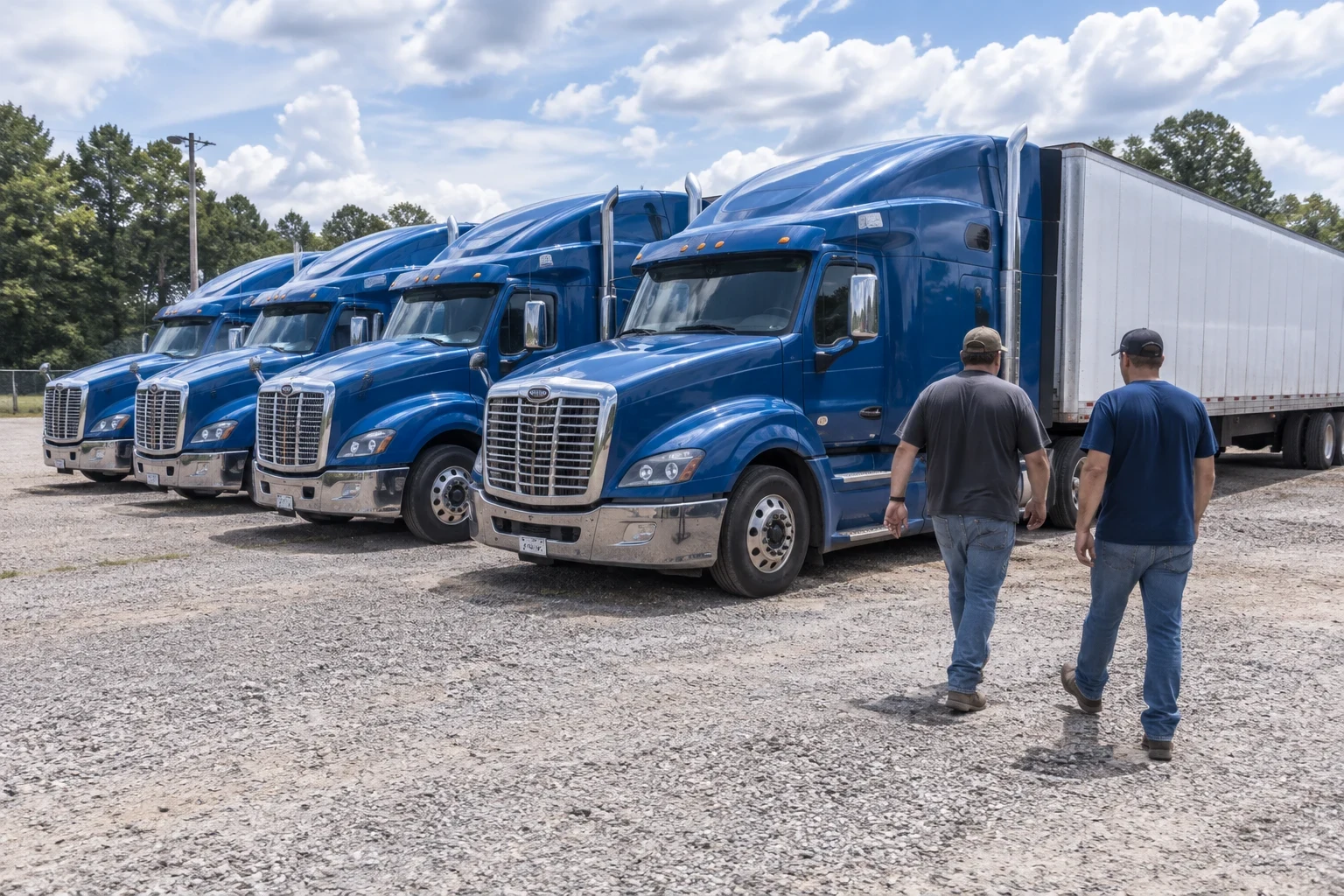
Running three trucks or thirty, you need one policy that covers every unit and every driver without gaps. We lay out the pieces of a fleet policy in plain words, shop it with our carriers and keep your filings and certificates in order.
What a fleet policy is, and when you need one
Once a motor carrier runs more than one or two power units, insuring each truck on its own gets messy. Renewal dates drift apart, a driver gets left off one policy, and a broker asks for a certificate that doesn't match. A fleet policy puts your trucks, trailers and drivers under one set of coverages with one renewal date.
It is built from the same parts as any commercial trucking insurance: primary auto liability, physical damage, motor truck cargo and often general liability. The difference is how the trucks and drivers are listed, how changes get made mid-term and how the underwriter looks at your whole operation instead of one rig.
We have been licensed for property and casualty insurance and doing this work for five years. Most of what we do for fleet owners is explaining what each line on the policy actually means before anything gets signed.
What we set up on a fleet policy
Liability for every power unit
Primary auto liability covering the trucks on your schedule, at the limit your MC authority and your shippers require. We file the federal and state proof of coverage tied to your DOT number.
Physical damage by unit
Each truck and trailer gets its own stated value and deductible. A new tractor and a paid-off 2012 don't have to carry the same coverage.
Cargo coverage that fits your freight
We check the commodity list and exclusions against what you actually haul. Reefer breakdown, theft and unattended-vehicle rules are where cargo claims usually get denied.
Driver list management
Adding a new hire means the carrier reviews their MVR and experience. We tell you what the underwriter will look at before you make the hire, not after.
Adding and removing units
When you buy a truck or sell one, we handle the endorsement and send updated certificates of insurance to the brokers and shippers who need them.
Trailer interchange and non-owned trailers
If your drivers pull trailers you don't own, we look at whether you need trailer interchange coverage and explain the difference.
Signs your trucks have outgrown single policies
Renewals all over the calendar
Three trucks renewing in three different months means three chances for a lapse and a pulled filing.
A driver isn't on the right policy
If a driver moves between trucks, they need to be listed where the carrier expects. An unlisted driver in an accident can turn into a denied claim.
Brokers keep asking for new certificates
When every load board setup needs a fresh certificate of insurance and your paperwork doesn't match, a single fleet policy cleans that up.
You are about to add units
Growing from two trucks to five changes how underwriters rate you. It is better to set up the structure before the new trucks arrive.
Your safety record has improved
Clean inspections, better CSA scores and dashcams are things an underwriter wants to see. A fleet review is a good time to put them in front of the carrier.
How we put your fleet policy together
- 1
Talk through your operation
By phone, video or at our office, we go over your trucks, trailers, drivers, freight, radius and lanes. You get a plain-English rundown of what coverage you have now and where the gaps are.
- 2
Gather the paperwork
We ask for your vehicle list with VINs, driver list with license details, and loss runs from your current carrier, usually the last three to five years. If you have safety programs or telematics, we include that too.
- 3
Shop and compare
We take your file to our carriers and line the quotes up side by side. We show you what changes between them: limits, deductibles, cargo exclusions and how drivers get approved.
- 4
Bind, file and certify
Once you choose, we bind coverage, handle the filings tied to your DOT number and MC authority, and send certificates to the brokers and shippers on your list.
- 5
Keep it current
Through the year, call us when trucks or drivers change. Before renewal, we review your loss history with you so there are no surprises in the premium.
What moves the premium on a fleet policy
We can't give you a number until a carrier looks at your file. What we can do is tell you which parts of your operation weigh most, so you know what to work on. These are the big ones.
- Loss history
- Your loss runs are the first thing an underwriter reads. A few small claims and one large one tell very different stories.
- Drivers
- Age, years of CDL experience and MVR violations for every listed driver. One driver with recent violations can affect the whole policy.
- Trucks and their values
- The number of power units, their age and their stated values drive the physical damage side.
- Freight and radius
- What you haul and how far. Local hauls around the south metro are rated differently than long-haul runs across several states.
- Safety record
- CSA scores, inspection results and safety tools like dashcams and ELD data can work in your favor at renewal.
Fleet truck insurance questions
Something not covered here? (770) 769-1250
How many trucks do I need before it counts as a fleet?
It depends on the carrier. Some write fleet programs starting at a few power units, others want more. We'll tell you which options fit your size when we go over your operation.
Do all my drivers have to be approved?
Yes, on most fleet policies each driver is listed and reviewed by the carrier. Some policies use a set of hiring rules instead, like minimum age and years of experience. We explain which kind you have so you know before you put someone in a truck.
What happens when I buy a new truck mid-year?
Call us before it goes into service. We add it to the schedule by endorsement, set its physical damage value and send updated certificates. The premium is adjusted for the rest of the term.
Can I keep a higher deductible on older trucks?
Often you can. Many fleet owners carry lower deductibles on newer units and higher ones or liability only on older paid-off trucks. We'll walk through what that saves and what it puts on you after a loss.
Why do you need my loss runs?
Loss runs show every claim on your past policies. Carriers won't quote a fleet without them. We can help you request them from your current insurer if you don't have copies.
Get your fleet coverage sorted out
Have your vehicle list and driver list handy and we'll go over your fleet line by line. You'll know what each coverage does before you decide anything.